
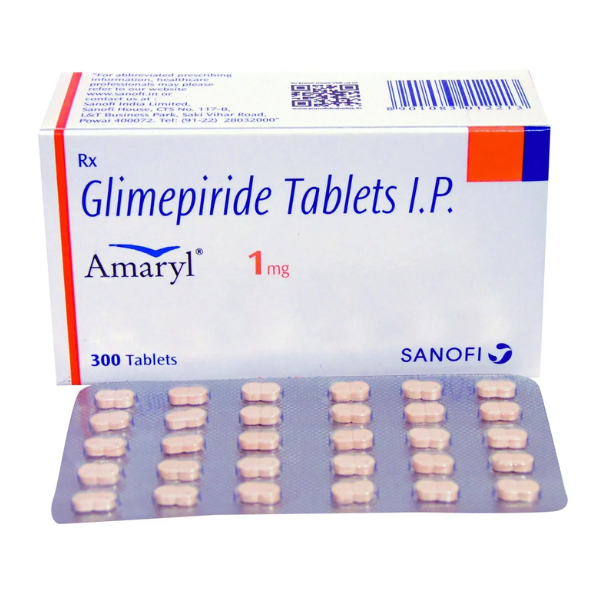
Glimepiride 1 mg Tablet
$11.99 – $34.99Price range: $11.99 through $34.99
| Quantity Value | Price | Price/Unit | Quantity | Add To Cart |
|---|---|---|---|---|
| 30 Tablet | $11.99 | $0.40 / Piece |
|
|
| 60 Tablets | $19.99 | $0.33 / Piece |
|
|
| 90 Tablets | $27.99 | $0.31 / Piece |
|
|
| 120 Tablets | $34.99 | $0.29 / Piece |
|
| Active Ingredient | Glimepiride |
| Drug Class | Sulfonylurea |
| Dosage Form | Tablet |
| Route | Oral |
| Strength | 1 mg |
| Pack Size | 30 Tablets |
Description
Glimepiride 1 mg Tablet is an oral medicine used to help control blood glucose in adults with type 2 diabetes mellitus.
It belongs to the sulfonylurea class and is generally used together with a suitable diet and exercise program.
Uses
- Type 2 diabetes mellitus
- Helps improve blood-glucose control
- Used together with diet and exercise
- May be prescribed alone or alongside other diabetes medicines
Glimepiride should not be used for type 1 diabetes or diabetic ketoacidosis.
How It Works
Glimepiride belongs to the sulfonylurea class. It lowers blood glucose primarily by stimulating the pancreas to release insulin.
The medicine is generally taken with breakfast or the first main meal, according to the prescribed regimen.
Common Side Effects
Possible side effects include:
- Low blood sugar (hypoglycemia)
- Dizziness
- Headache
- Nausea
- Weakness
- Weight gain
Hypoglycemia can sometimes be serious, particularly in people who are elderly, have kidney impairment, or use other glucose-lowering medicines.
Important Safety Information
The most important safety concern with glimepiride is hypoglycemia, which can be severe. Patients should understand the symptoms of low blood sugar and follow their healthcare professional’s instructions regarding meals, exercise, and medication.
Tell your healthcare professional if you have:
- Kidney disease
- Liver disease
- G6PD deficiency
- Sulfonamide allergies
- A history of low blood sugar
- Other diabetes medicines
Glimepiride is generally started at 1–2 mg once daily, with dosage adjustments made by the healthcare professional according to blood-glucose response. Patients at increased risk of hypoglycemia may require a lower starting dose.
Do not change the dose or stop treatment without medical advice.
Storage
Store according to the conditions specified on the product packaging. Keep the tablets tightly closed and out of reach of children.